
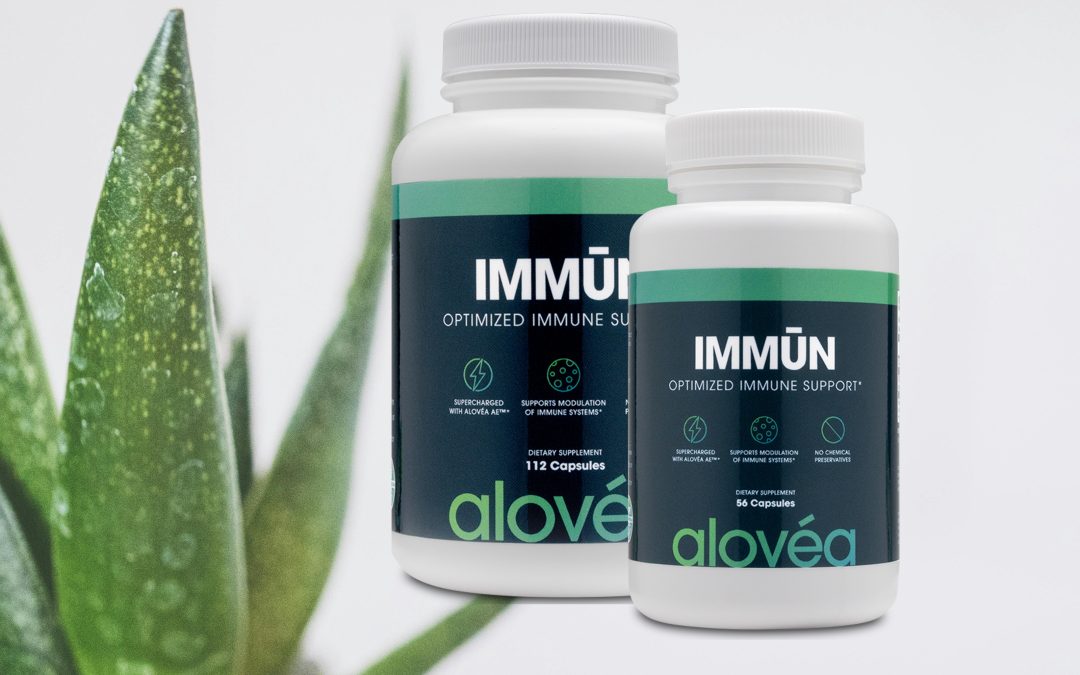
Alovéa Immūn
In 1985, my personal and professional life changed because of the key ingredient in Alovéa Immūn. At that time, a new company called Carrington Laboratories, Inc. was formed. It was a publicly traded company with a $20-million goal: to develop a new pharmaceutical drug from aloe leaf gel.
I was invited to be a medical consultant. At first, I refused, saying I wasn’t qualified to join such a research team. But the company’s leaders were persistent, and I finally agreed. At the time, I was strongly influenced by the pharmaceutical and conventional medicine mindset. I doubted aloe vera had any real health value and believed my role would be to prove this — to prevent the company from wasting money.
What happened instead completely surprised me.
Discovery of Acemannan
Research at three medical schools and at the Texas A&M School of Veterinary Science revealed that the active molecule in aloe gel — acetylated mannose (Acemannan) — worked in a way no drug had ever functioned. Instead of attacking the infectious agent’s biochemistry directly, Acemannan boosted the body’s own defense systems — both cellular and humoral (blood serum) defenses — against all types of infectious organisms.
At first, we believed we had discovered the strongest possible immune stimulant. But then, something unexpected happened. People with allergies, asthma, and autoimmune diseases — all conditions of overactive immune systems — began reporting improvements as well. This meant Acemannan was not just stimulating immunity; in some cases, it was suppressing and calming immune overactivity.
The Breakthrough
A conference on host defense biochemistry, also called the inflammatory response, helped us understand why. The body’s defense system works through a cascade of bioactive compounds. These compounds both activate defenses when needed and calm them down when the danger of the eliminated infectious organism is passed.
Dr. Hans Selye, known as the “Father of Human Physiology,” called this balanced state homeostasis — when all the body cells’ inner substances are moved to the “normal zone.”
Here’s the key: in cell biology, nine molecules of Acemannan come together to form a cell membrane domain. This structure helps cells either increase or decrease activity as needed to restore balance. If homeostasis is maintained, health remains normal. When balance is lost, symptoms and abnormal biomarkers appear — what we call disease or a syndrome.
This is why Acemannan has shown such a wide range of benefits. It acts as a modulator — stimulating or calming as needed — to bring organ cells back into balance and support health across all body systems. In homeostasis, there are no deviations from normal within cells of organs or systems.
Independent Validation
Aloe Acemannan’s importance has been validated repeatedly. As early as 1985, the Annual Review of Biochemistry published by S. and R. Kornfeld cited the significance of homeostasis.. More recent research in China continues to confirm the impact of Acemannan on multiple organ systems, with dozens of publications in the bibliography supporting Acemannan’s role in maintaining health.
Even more exciting, medical school studies have shown that Aloe Acemannan supplementation can restore memory and cognition in Alzheimer’s patients. This appears to happen because Acemannan stimulates the production of millions of stem cells, which migrate into the brain and transform into needed brain cells. Benefits have also been observed in patients with:
- Cerebral palsy
- Stroke
- Parkinson’s syndrome
- Down’s syndrome
- Multiple sclerosis
- Fragile X boy’s dementia
- Fetal alcohol syndrome
- Other conditions that impair brain function
The Result: Alovéa Immūn
All of these discoveries led to the development of Alovéa Immūn. This supplement, in a capsule, brings the remarkable science of Aloe Acemannan into a form that can support your body’s defenses, restore balance, and promote good health across all systems.
Alovéa Immūn supports everything listed above — from immunity to brain function to whole-body homeostasis.
Will this be a substitute for Nutrimen?