
Where Do “Real” Vitamins Come From?
A common question I’m often asked is:
“How can I get real vitamins – the kind made by nature?”
My honest answer has long been simple:
By eating a wide variety of fully ripened berries, fruits, and vegetables.
Unfortunately, that has become increasingly difficult in modern food systems.
The Problem with Modern Produce
Most fruits and vegetables sold in national markets are harvested green to extend their shelf life and shipping time. Green-harvested produce contains primarily chlorophyll—a remarkable molecule for photosynthesis, but not the same as the complex vitamins and phytonutrients produced during full plant ripening.
True, plant-ripened foods allow plant genes to complete the synthesis of natural vitamins and bioactive compounds that conduct the biochemistry of life. Without a garden or fruit trees, access to these fully ripened foods is rare.
Canned or frozen fruits and vegetables are often nutritionally superior to “fresh” green-harvested produce, yet even then, the exact vitamin content remains unknown.
Guesswork Has Dominated Nutrition
Even when eating fruits and vegetables, we never truly know:
- Which vitamins are present
- In what amounts
- Or whether key phytonutrients are missing
This uncertainty has been well documented by researchers such as Judith De Cava, MS, author of The Real Truth About Vitamins and Antioxidants, influenced by Royal Lee, DDS, a pioneer in whole-food nutrition.
Their work demonstrates that natural vitamins are complex molecular structures—structures that pharmaceutical laboratories cannot duplicate.
Why Synthetic Vitamins Fall Short
One of the clearest examples comes from Dr. Albert Szent-Györgyi, Nobel Prize–winning scientist for his discovery of vitamin C. In a paper published in Nature, he wrote that synthetic ascorbic acid (USP vitamin C) is not the same as the vitamin C complex found in plant leaves.
His research showed that 2 mg of natural vitamin C complex provided the same biological activity as 2,000 mg of synthetic ascorbic acid.
This principle applies broadly across vitamins:
Nature’s vitamins are not single molecules – they are complexes.
A Turning Point in Nutritional Science
For decades, misinformation has dominated nutrition—driven by mass-produced synthetic vitamins, outdated textbooks, marketing influence, and well-meaning but misinformed professionals. Today, science has finally caught up.
It is now possible to:
- Extract natural vitamins from the plants that produce them
- Assay them for amount and bioactivity
- Clearly label their plant source and potency
This removes the guesswork and ends reliance on artificial, man-made substitutes that are easy to make and can be cheaply sold but have limited bioactivity in metabolism.
A New Era: Assayed Natural Vitamins
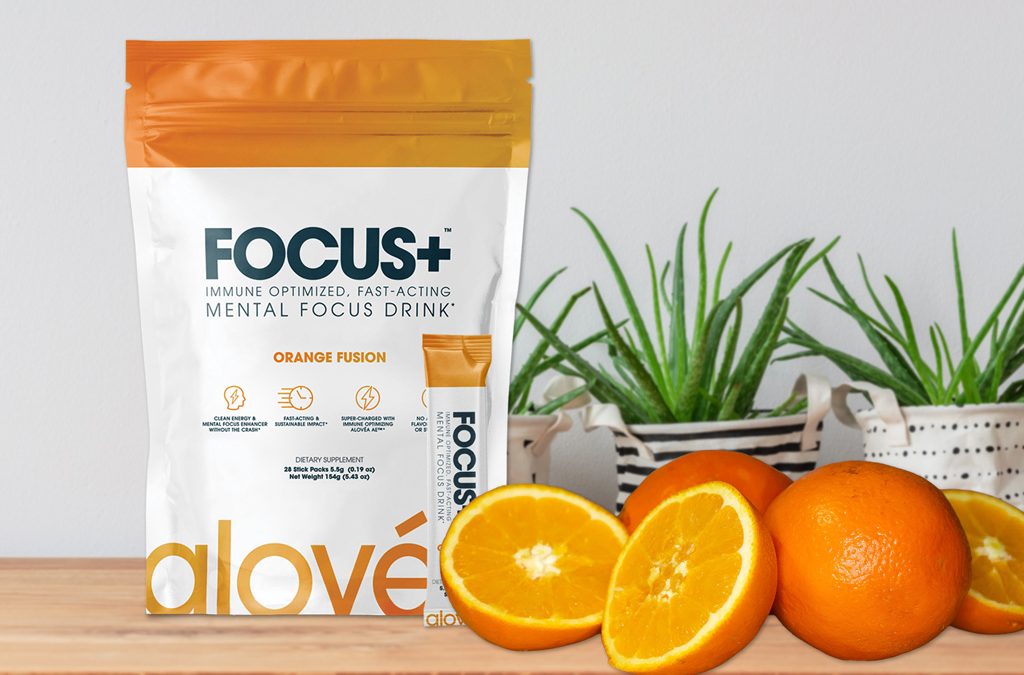
Alovéa is proud to offer FOCUS™ and FOCUS+™, formulated with assayed, standardized natural vitamins sourced from whole plants—ushering in a new era of nutritional clarity and confidence.
These nature-made vitamins are combined with complementary nutrients designed to:
- Support mental focus and clarity because the biochemistry of life is optimized
- Enhance energy
- Support normal immune function and metabolism for all organs and systems.
Enjoyed as a smoothie or beverage, they make daily nutrition both effective and pleasurable.
The Takeaway
Nature produces vitamins with complex molecular structures that science cannot imitate.
Today, we finally have access to those vitamins—measured, verified, and available for daily use.
This is not dietary supplementation as we once knew it.
It is nutrition produced by nature, needed for good health and longevity.
Recent Comments