
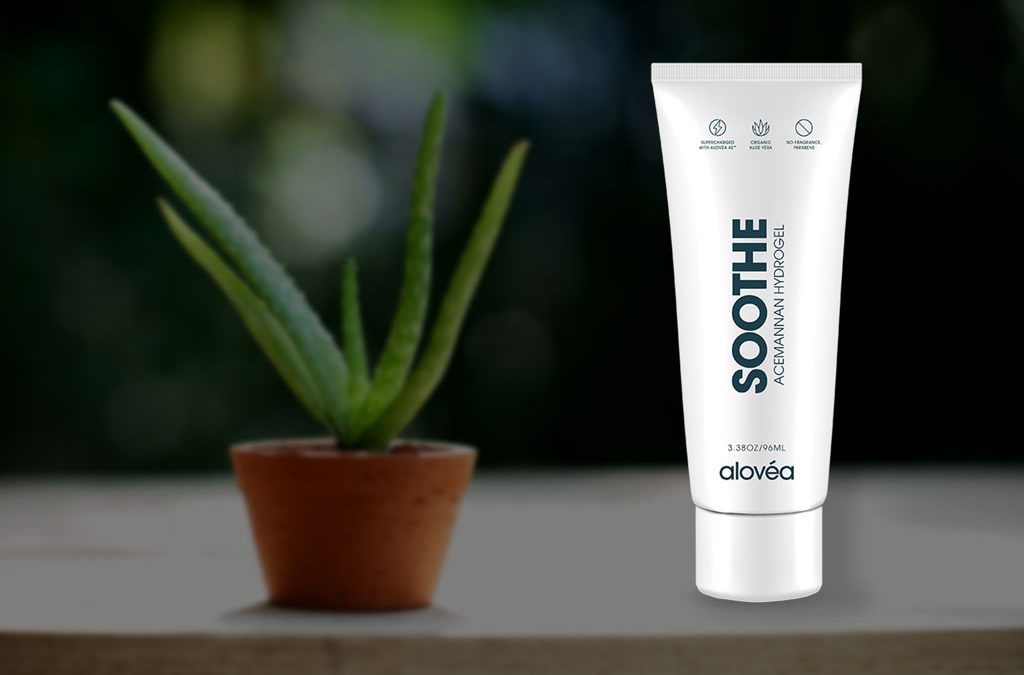
Alovéa – Soothe
Few recognize that Aloe Leaf Gel has a history of human use in skin applications that spans more than 5,000 years. The war statistician Alexander the Great (356-323 B.C.) of Macedonia had aloe plants growing in large pots in his supply train. Arrows, swords, spears, and knife wounds were the common wounds of war in that era, and aloe gel accelerated healing and reduced infections.
The Egyptians pioneered the internal use of a wide range of substances for various health benefits. In 2 A.D., Pliny the Elder of Rome wrote a treatise for oral intake for the benefit of a long list of health maladies.
In the early 1980s, Carrington Laboratories Inc. raised $ 20 million, intending to identify, isolate, test, and develop a new, government-approved drug from an unknown, plant-produced bioactive molecule in aloe leaf gel. This correspondence was made by a medical consultant in 1985. Due to the indoctrination of the Pharmaceutical and Conventional Medicine paradigm, there was rejection and skepticism that the aloe gel had any health-supporting value. I was unaware of the information presented in the first paragraphs. I aimed to prevent the company from squandering its research funds on unattainable goals. I believed aloe had no health-supporting value. It was not a prescription drug approved by the FDA. In time, I found out how wrong I could be.
The first product marketed by Carrington was a topical aloe wound gel. My first duty was to determine the optimal gel thickness by collaborating with nurses at Dallas-Ft Worth Medical Center. They were amazed at how rapidly skin lesions (huge bed sores) would heal. Tubes of this formulation were placed with the Parkland Hospital Burn Center in Dallas. It was found that a radioactive nucleic acid (Tritium) was taken into fibroblast growth 300% faster when the aloe gel was available for cell metabolism. This proved why burns and open skin wounds healed faster.
The aloe plant-made bioactive molecule was determined to be acetylated mannose (Acemannan). The topical gel containing this molecule was marketed and found to rapidly heal various types of skin lesions, stop bacterial and viral infections, block sunburn, and reduce itching and pain. These benefits also included the mucosa of the mouth, sinuses, urinary bladder, and vagina.
Acemannan had no toxicity in routine and extended safety studies. This was pharmaceutical drug heresy, and the FDA rejected the application for approval as a new drug.
A plastic surgeon at the Parkland Burn Center questioned the value of Aloe Acemannan and designed a series of experiments using all the ingredients in the gel formulation, both with and without Acemannan. The test model was a standard burn on the skin of guinea pigs. This study was published. It was reported that Acemannan healed burns 20% faster, and the burn eschar (scab) submitted for bacterial levels contained no viable organisms. The body’s defense systems had killed all bacteria.
An enthusiastic individual sent a case of wound gel formulated with Acemannan to the Fort Sam Houston Burn Center, where all major military burns are managed. Soon, a phone call was received from one of the attending physicians. A request was received for all published and laboratory data that had accumulated, as well as for one or more lectures on the science that supported this wound gel. Burn victims would only allow the aloe wound gel to be used on them. The aloe gel reduced or eliminated burn pain, increased the healing rate, and reduced scarring. The physicians found that the plague of burn infections, often the cause of death, was virtually eliminated, and the healing of the hands was remarkably improved, with function restored rather than typically restricted. Pressure bandages to reduce keloid formation in movement were eliminated for the fingers. Unfortunately, all the burn unit physicians had been relocated to distant hospitals before this request was executed.
Personally, I have found Soothe destroys basal cell carcinomas and accelerates healing like no other aloe gel. It has fostered the eradication of toenail fungus where similar aloe topical products failed.
Because of these observations, Wellness Quest is pleased to let you know that SOOTHE, containing Acemannan in a 3.38 oz tube, is now available on our website for your benefit. SOOTHE is designed for skin and mucous membrane applications. In your next dietary supplement order, consider keeping tubes of SOOTHE on hand at home, in your car, and at any other property site. Do not forget your SOOTHE when you go on vacation.
Recent Comments